

Are your data meetings helping teachers make instructional decisions, or are they simply confirming what you already know?
Think about your last faculty or leadership team meeting when you reviewed student achievement data. You probably looked at assessment scores, discussed students who were performing below grade level, and identified areas needing improvement.
Maybe you even established a few goals.
But here’s what I’d like you to consider:
When everyone left that meeting, did they know what to do differently?
Schools have access to so much information about student learning: benchmark assessments, progress monitoring, classroom assessments, and achievement reports, and so on. But having more data doesn’t automatically lead to better student outcomes. What matters is what they do with that information.
Are We Looking at Scores or Student Learning?
It’s easy for a data meeting to become a conversation about numbers.
- How many students are proficient?
- Which grade level showed growth?
- Where are the achievement gaps?
These are important questions. But I think we sometimes stop the conversation too soon.
A score tells us where a student performed on a particular assessment. It doesn’t necessarily tell us why the student is struggling or what instructional support might make a difference.
That’s where the conversation needs to go deeper.
Instead of asking only, “Why aren’t these students performing better?” what if we asked:
“What is this data helping us understand about student learning?”
Maybe students understand a concept when the teacher models it but struggle to apply it independently. Maybe they’re missing foundational skills. Or maybe they know more than they’re able to demonstrate on a particular assessment.
We won’t know unless we look beyond the scores.
What Happens After We Identify the Problem?
Here’s another pattern I’ve noticed in school improvement work.
Leadership teams spend considerable time identifying priorities.
- Improve reading achievement.
- Strengthen math performance.
- Increase student engagement.
All worthwhile goals. But what happens after the goals are written? Let’s say your school has identified reading achievement as a priority. You know where students are performing. You know which grade levels need additional support.
Now what?
What will teachers do differently during instruction?
What professional learning or coaching might they need?
And how will you know whether those changes are helping students?
These are the conversations that connect school improvement goals to classroom practice. At KM Educational Consulting, much of our work focuses on helping schools make those connections. Because a school improvement goal shouldn’t be something we revisit only when it’s time to update the plan. It should help guide the decisions we’re making throughout the school year.
A Book Worth Sharing: Using Data to Focus Instructional Improvement
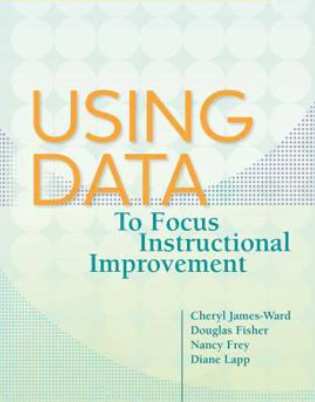
If your leadership team is looking to make data conversations more meaningful, one book I’d recommend is Using Data to Focus Instructional Improvement by Cheryl James-Ward, Douglas Fisher, Nancy Frey, and Diane Lapp.
This book encourages school leaders to look beyond assessment scores and consider the bigger picture of student learning. The authors introduce a five-phase approach that helps school teams examine available evidence, identify patterns, explore underlying causes, establish meaningful goals, and monitor whether their efforts are making a difference.
One great idea is the importance of not jumping straight from identifying a problem to choosing a solution. How often do we see lower-than-expected assessment results and immediately start discussing a new program, intervention, or professional development initiative?
But have we spent enough time understanding why students are struggling?
Schools don’t necessarily need a new improvement goal every year. Sometimes, the most important work is continuing what they started, examining the evidence, and making adjustments along the way.
As an Amazon Associate, I earn from qualifying purchases.
Are Students Part of the Conversation?
We’ve talked about how leadership teams and teachers can use data to make better instructional decisions. But there’s another group that needs to be part of the conversation: students.
We spend a lot of time helping teachers and school leaders understand student performance. But how often do we help students understand their own progress?
- Can students explain what they’re learning?
- Do they know what they’re doing well?
- Can they identify where they need to improve?
- Do they know what they can/should do next?
This is where learner agency becomes part of the conversation. When students have opportunities to reflect on their learning, set meaningful goals, and monitor their progress, they begin to take greater ownership of the learning process. That doesn’t mean students are responsible for figuring everything out on their own.
Teachers still provide the instruction, guidance, feedback, and support students need. But students become more active participants in understanding and improving their own learning. And isn’t that what we ultimately want? Students who don’t simply wait for someone to tell them how they’re doing, but who can recognize their progress and begin to identify their next steps.
How Do We Know Our Efforts Are Making a Difference?
We encourage school leaders to look at more than one source of evidence when evaluating improvement efforts. Of course, we want to see stronger assessment results. But we should also be asking what is changing in classrooms along the way.
- Are teachers adjusting instruction based on what they’re learning about students?
- Are students becoming more independent?
- Can students explain their thinking and use feedback to improve?
- Are instructional practices becoming more consistent across grade levels?
These changes matter because they help us understand whether our improvement efforts are taking hold.
In our work with partner schools, we’ve documented encouraging academic growth, including assessment-score increases of 4–7% and reading achievement increasing from 55.7% to 60.6%. We’ve also seen progress in student goal setting, reflection, self-assessment, confidence, and instructional consistency.
These are different kinds of evidence, and together they help tell a more complete story about school improvement.
Of course, meaningful growth doesn’t happen because of one meeting or one professional development day. It takes ongoing attention to instruction, student learning, and the systems that support both.
One Question for Your Next Data Meeting
The next time your leadership team gathers to review student achievement data, I’d encourage you to pay attention to where the conversation goes.
- Are you spending most of your time discussing the results?
- Or are you also talking about what those results mean for instruction?
- Before the meeting ends, consider asking: “Based on what we’ve learned today, what should students experience differently in our classrooms?”
Then follow that with two questions:
- What will we do to make that happen?
- What evidence will tell us whether it’s working?
Those questions can help move the conversation from identifying a problem to making instructional decisions that support student growth.
Because the goal isn’t simply to collect more data or write another improvement goal.
It’s to use what you are learning to make better decisions for the students.