

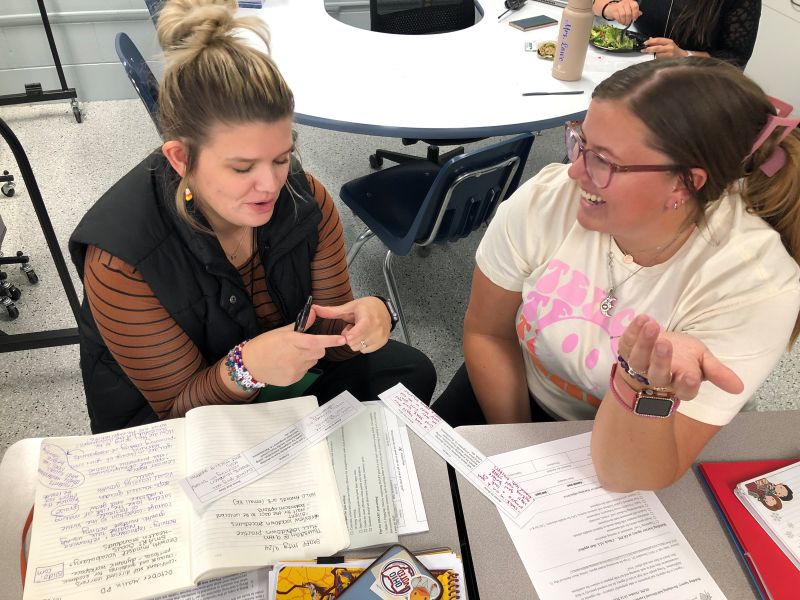
I intentionally build reflection into every faculty professional development or coaching session I facilitate.
Sometimes I ask teachers to think about what they learned during the previous school year. During a coaching cycle, I might invite them to reflect on what they tried, what they noticed in their students, and what they want to adjust next.
The reflection always points toward an important question:
What will you do next to improve student learning?
I include this time because professional learning should not end when the workshop or coaching cycle ends. Teachers need opportunities to pause, make sense of what they are learning, and decide how that learning will influence their practice.
Students need those same opportunities.
When students do not regularly reflect, they remain dependent on teachers to evaluate their progress, identify their challenges, and determine their next steps. If we want students to take greater ownership of their learning, we have to help them recognize what is happening in their own learning.
Leadership Move #2: Build Student Reflection Into Daily Instruction
Reflection develops metacognition, or the ability to think about one’s own learning.
In practical terms, metacognition helps students begin to answer questions such as:
- What helped me understand this?
- Where did I struggle?
- How did I respond when the work became difficult?
- What feedback can I use?
- What should I try next?
These are not simply end-of-lesson questions. They help students become more intentional learners.
Reflection is not just how students end a learning experience. It is how they learn to make their next decision.
That is why reflection should not be reserved for report cards, the end of a unit, or the occasional student conference. It can become a short, consistent part of daily instruction.
A teacher might pause during a lesson and ask:
- What strategy is helping you right now?
- Where are you getting stuck?
- What have you tried so far?
At the end of the lesson, students might consider:
- What did I learn today?
- What feedback will I apply?
- What will I try differently tomorrow?
These moments do not need to take a great deal of instructional time. A brief written response, a conversation with a partner, or a whole-class discussion can begin to make student thinking more visible.
The more important question is whether students’ reflections influence what happens next.
Does the student use the reflection to choose a different strategy? Does the teacher use it to adjust the next day’s instruction? Does the conversation help the student see a mistake as useful information rather than as failure?
Without a connection to what happens next, reflection can become one more task students complete. When reflection informs a decision, it becomes part of the learning process.
What Leaders Can Notice During Walkthroughs
As you move through classrooms, listen for students talking not only about the assignment in front of them but also about how they are approaching it.
You might look for evidence that:
- Students explain what they learned, not only what they completed
- Students identify strategies that supported their learning
- Students describe where they struggled and what they tried.
- Mistakes are discussed as useful information.
- Student reflection influences future learning or instructional decisions.
What are students being invited to notice about their own learning?
What happens after they identify a challenge?
Would students say that reflection is a normal part of learning in this classroom—or something they do only when a teacher requires it?
These questions can help leaders look beyond whether a reflection activity occurred and consider whether it is developing more independent learners.
From Leadership Expectations to Student Ownership
Building reflection into daily instruction begins with a leadership decision: reflection matters enough to become part of how the school defines learning.
That decision influences teacher practice. Teachers create regular opportunities for students to pause, notice, and explain their thinking.
Those opportunities influence student thinking. Students begin to recognize effective strategies, respond more purposefully to feedback, and identify what they need next.
Over time, students become better prepared to take an active role in their learning rather than waiting for the teacher to make every decision for them.

A useful coaching question is:
How does student reflection influence your next instructional decision?
The answer can reveal whether reflection is functioning as an isolated activity or as meaningful information for both the student and the teacher.
As you move through classrooms this week, listen closely to how students talk about their learning.
Are they describing only what they completed?
Or are they beginning to understand themselves as learners—and using that understanding to decide what comes next?
Next Week in the Series
Students who set goals know what they’re learning.
Students who reflect understand how they’re learning.
Next week, we’ll explore the third leadership move in this series:
How increasing opportunities for student choice helps learners move from engagement to true ownership.