
Over the past few weeks, I’ve spent a lot of time with my partner schools talking about one question:
How do we help students become more independent learners?
We’ve talked about goal setting, reflection, critical thinking, productive struggle, and giving students more responsibility for their learning.
But as I’ve said to faculty and school leaders throughout these conversations, the professional development session is only the beginning.
What happens when everyone goes back to the classroom?
That is where implementation matters.
If we want learner agency to become part of how students experience school every day, teachers need clear expectations, opportunities to practice, and continued support from leadership. And leaders need a way to see whether those practices are actually beginning to change what students do.
This is one of the reasons I believe so strongly in professional learning partnerships rather than one-time workshops. With my partner schools, the August PD gives us a starting point. The work that follows allows us to see what is happening during implementation, identify where additional support is needed, and determine what comes next.
That is also where leadership tools become important. Walkthrough look-fors, coaching questions, reflection tools, and implementation check-ins give leaders a practical way to keep the work moving after the PD ends.
Bringing the Three Leadership Moves Together
Over the past three articles in this series, I’ve focused on three leadership moves that can help students become more independent learners:
- Establish a schoolwide goal-setting routine. Can students explain what they are learning and what success looks like?
- Build reflection into daily instruction. Can students think about how they are learning, identify helpful strategies, and determine what they need to do next?
- Increase opportunities for student decision-making. Are students making meaningful, appropriate decisions about how they learn, practice, or demonstrate their understanding?
Each of these matters on its own.
But the real opportunity comes when they begin to work together.
A student understands where they are going, thinks about how their learning is progressing, and begins making decisions about what to do next.
That is where we begin to see learner agency.
So, What Happens Next?
You don’t need to launch another complicated initiative.
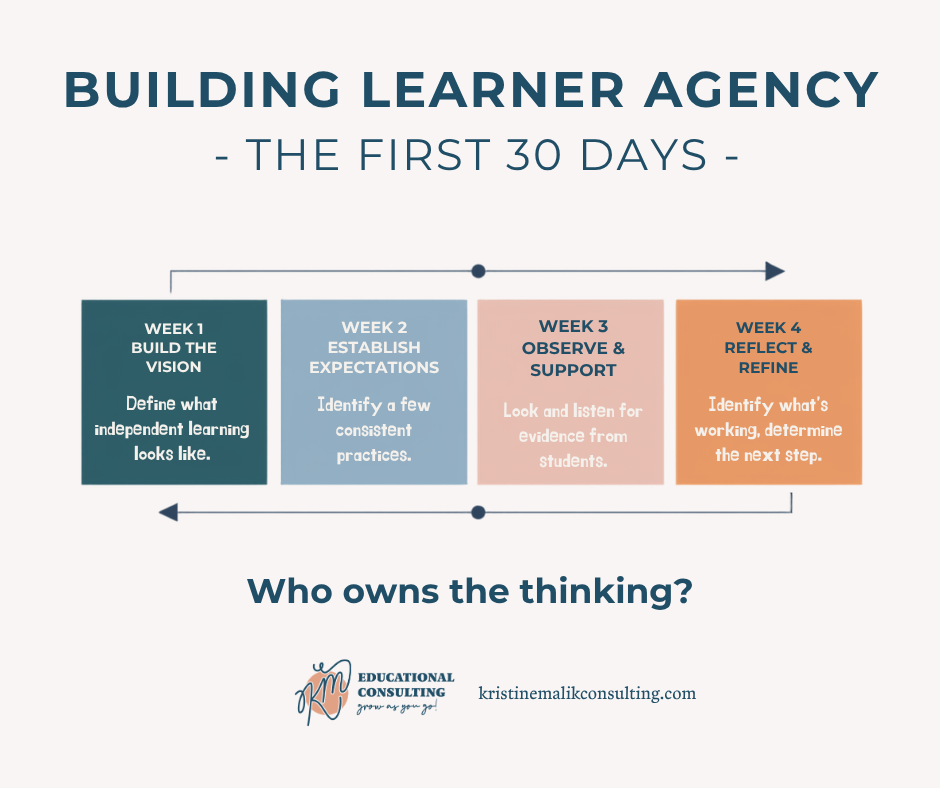
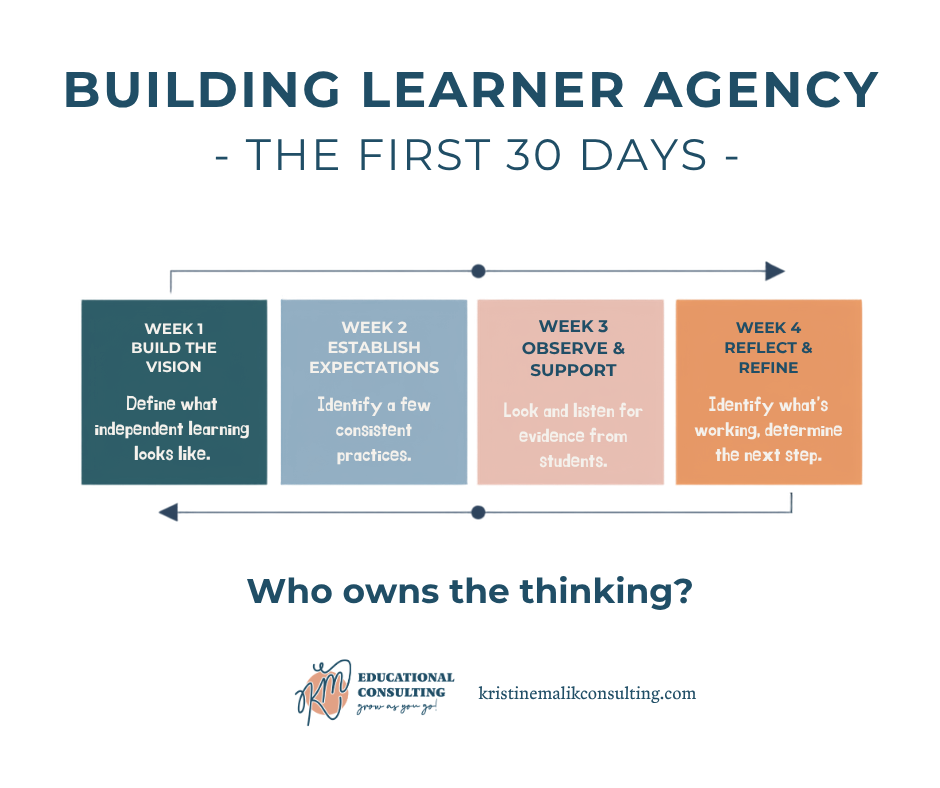
Instead, use the first 30 days to begin creating consistency around these three leadership moves.
Here is one way to approach it.
Week 1: Build the Vision
Start with the why.
What does an independent learner look like in your school?
Talk with faculty about the difference between students who are compliant and students who are beginning to take ownership of their learning.
Introduce the three leadership moves and connect them to the academic priorities your school already has in place.
This connection is important.
Learner agency should not feel like one more initiative. If your school is focused on reading, mathematics, critical thinking, or another academic priority, ask:
How could greater student ownership strengthen the work we are already doing?
Week 2: Establish Expectations
Now begin moving from the idea of learner agency to what it actually looks like in classrooms.
Choose a few practices teachers can begin using consistently:
- One common approach to helping students understand and use learning goals
- A simple way for students to reflect on their learning
- Opportunities for students to make appropriate decisions about how they learn, practice, or demonstrate understanding
The goal isn’t to change everything at once.
Start small enough that teachers can actually implement what you’ve discussed.
Week 3: Go See What Is Happening
This is where leadership becomes especially important.
Get into classrooms.
But instead of looking only at what the teacher is doing, start looking and listening for what the students are doing.
Can students explain what they’re learning?
Can they tell you what they do when they get stuck?
Can they describe a decision they’ve made about their learning?
Can they tell you how they know they’re making progress?
These small conversations can tell you a lot about whether learner agency is beginning to move from professional development into classroom practice.
And when you see it happening, acknowledge it. Share those early examples with faculty and celebrate the progress.
Week 4: Reflect and Refine
After a few weeks of implementation, bring teachers back into the conversation.
Ask:
What’s working?
What are you noticing from students?
Where are students still relying heavily on you?
What has been difficult to implement?
Then use what you learn to determine the next step.
You don’t need to strengthen all three leadership moves at the same time.
Perhaps goal setting is becoming consistent, but student reflection still needs work.
That’s useful information.
Choose the next area to strengthen and keep moving.
The Goal Isn’t Perfect Implementation
At the end of 30 days, I wouldn’t expect learner agency to look the same in every classroom.
That’s not the goal.
I would want to see something else:
Are we beginning to develop shared language?
Do teachers understand what we’re working toward?
Are leaders looking for evidence of student ownership?
And most importantly, are students beginning to do more of the thinking?
That last question is one I would keep asking as you walk through your building:
Who owns the thinking?
Because the first 30 days aren’t the end of the work.
They’re the beginning of the implementation.
Put the Plan Into Practice
If you’re ready to move from talking about learner agency to supporting implementation, I created the First 30 Days Leadership Toolkit to help.
It includes practical walkthrough look-fors, coaching questions, and implementation tools built around the same three leadership moves in this series.